
 英语
 俄语
Content
- 1 1. The Role of Chromatography Columns in Industrial Separation
- 2 2. Product Overview
- 3 3. Working Principle of Resin Column Separation
- 4 4. Main Structural and Functional Features
- 5 5. Technical Specifications
- 6 6. Advantages Compared with Basic or Poorly Integrated Columns
- 7 7. Applications in Different Industries
- 8 8. Manufacturing and Engineering Strengths
- 9 9. Multi-Column System Design
- 10 10. Selection Guidelines for Buyers
- 11 11. Installation, Operation, and Maintenance Considerations
- 12 12. Quality, GMP, and Process Documentation
- 13 13. Sustainability and Operating Efficiency
- 14 14. Frequently Asked Questions
- 14.1 Q1: What is a stainless steel chromatography column?
- 14.2 Q2: Which industries can use this equipment?
- 14.3 Q3: Can the column handle organic solvents?
- 14.4 Q4: When should SUS316L stainless steel be selected?
- 14.5 Q5: What does the padding mesh specification mean?
- 14.6 Q6: Can several columns be connected into one system?
- 14.7 Q7: Is PLC automation available?
- 14.8 Q8: How should the correct model be selected?
- 14.9 Q9: Can the equipment be used for pilot production?
- 14.10 Q10: What services can the manufacturer provide?
- 14.11 Q11: Why is pretreatment important before chromatography?
- 14.12 Q12: How does a professional column improve production reliability?
- 15 15. Conclusion
- 16 References
- 17 Product: Stainless Steel Chromatography Column Resin Column Separation Equipment
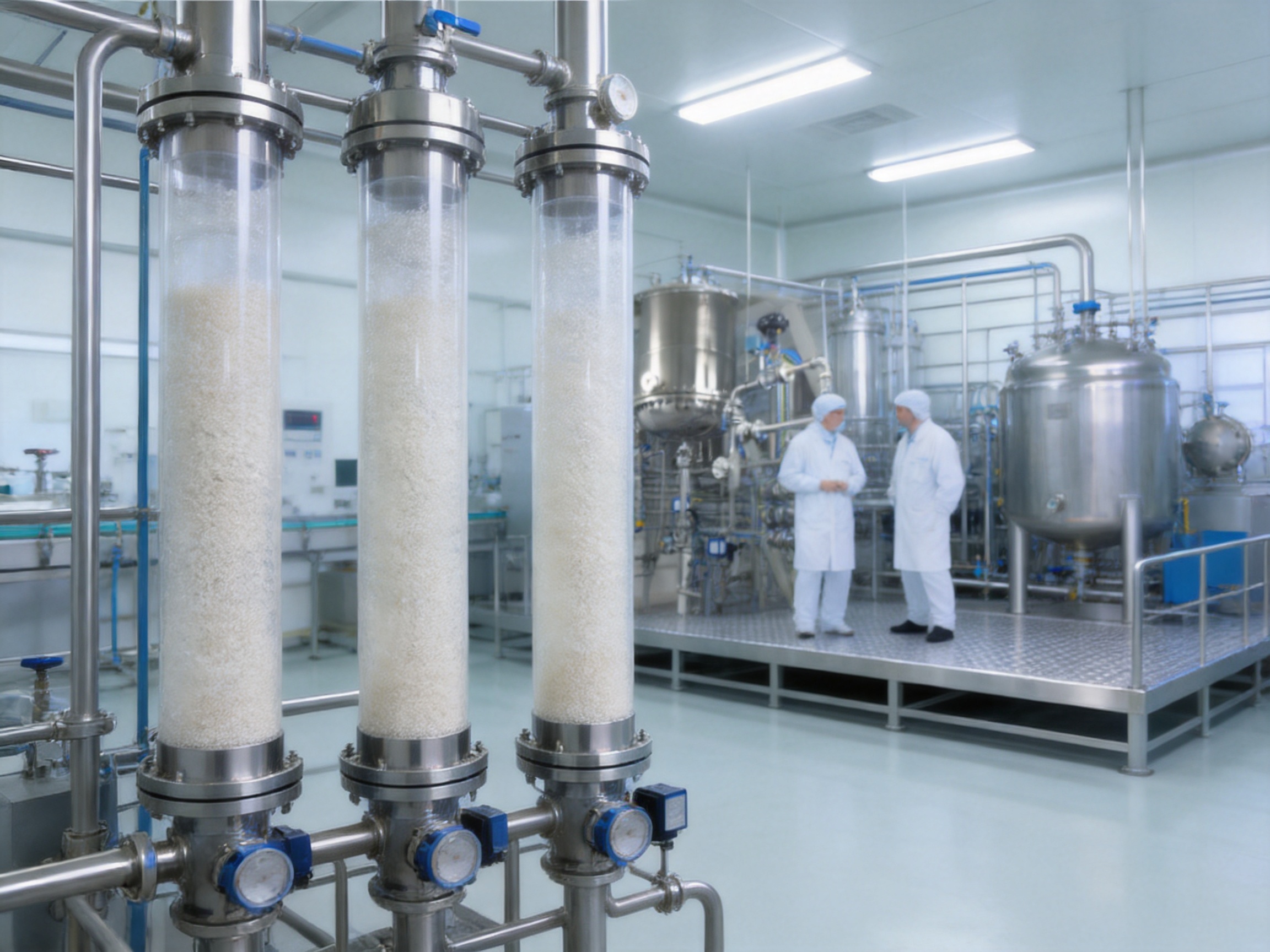
Stainless Steel Chromatography Column Resin Separation Equipment for Pharmaceutical, Food, and Biotechnology Processing
Chromatography is an important separation and purification technology used to isolate valuable compounds from complex liquid mixtures. In pharmaceutical processing, plant extraction, food production, biotechnology, enzyme manufacturing, beverage production, and chemical processing, the quality of the separation system directly affects product purity, recovery rate, process stability, and operating cost. Stainless steel chromatography columns, also known as resin columns, provide a dependable solution for the adsorption, purification, decolorization, and impurity-removal stages of modern production lines.
The stainless steel chromatography column supplied by Zhejiang Shuangzi Intelligent Equipment Co., Ltd. is designed for pilot-scale and large-scale processing. It can be used as an individual column or integrated into a multi-column separation system. With sanitary pipelines, corrosion-resistant construction, independent flow control, flexible resin compatibility, and optional PLC automation, the equipment is suitable for facilities that require repeatable processing and hygienic production conditions.
This article explains the structure, operating principle, applications, technical specifications, manufacturing strengths, and selection considerations of stainless steel chromatography column equipment. It also examines the advantages of a professionally engineered system compared with basic or poorly integrated separation columns.
1. The Role of Chromatography Columns in Industrial Separation
Many industrial liquids contain a mixture of target compounds, residual raw materials, pigments, salts, proteins, microorganisms, organic impurities, and other substances. Traditional filtration or simple sedimentation may remove suspended solids, but these methods are often insufficient when the desired product is dissolved in the liquid phase together with chemically similar impurities.
Chromatography provides a more selective separation method. The liquid passes through a packed bed of resin or another functional medium. Different substances interact with the resin in different ways. Some compounds are adsorbed strongly, while others pass through the column more quickly. By controlling the feed, washing, elution, regeneration, and discharge stages, the operator can separate and recover the planned active components.
A stainless steel chromatography column therefore functions as a controlled contact vessel between the process liquid and the resin. It must maintain stable flow distribution, support the resin bed, withstand the working pressure, resist chemical attack, and allow effective cleaning and regeneration. The quality of the column design has a direct effect on separation efficiency and the service life of the resin.
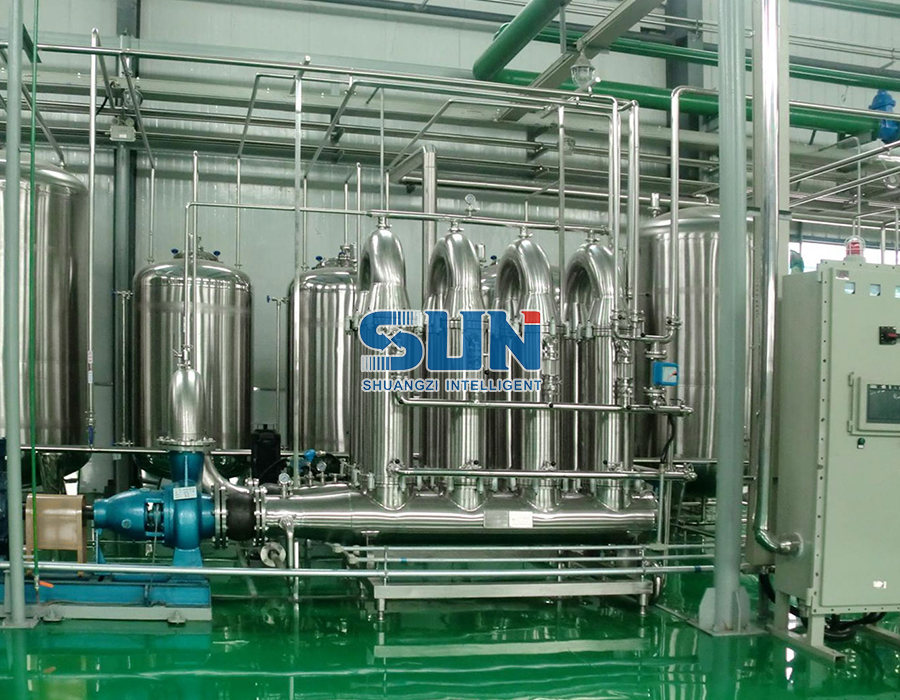
In industrial applications, chromatography columns are rarely used only as isolated laboratory devices. Several columns may be installed on a common frame to form a complete separation system. Each column can be connected with its own valve, flow meter, process pipeline, and operating route. This arrangement allows different columns to perform adsorption, washing, elution, regeneration, or standby functions at the same time.
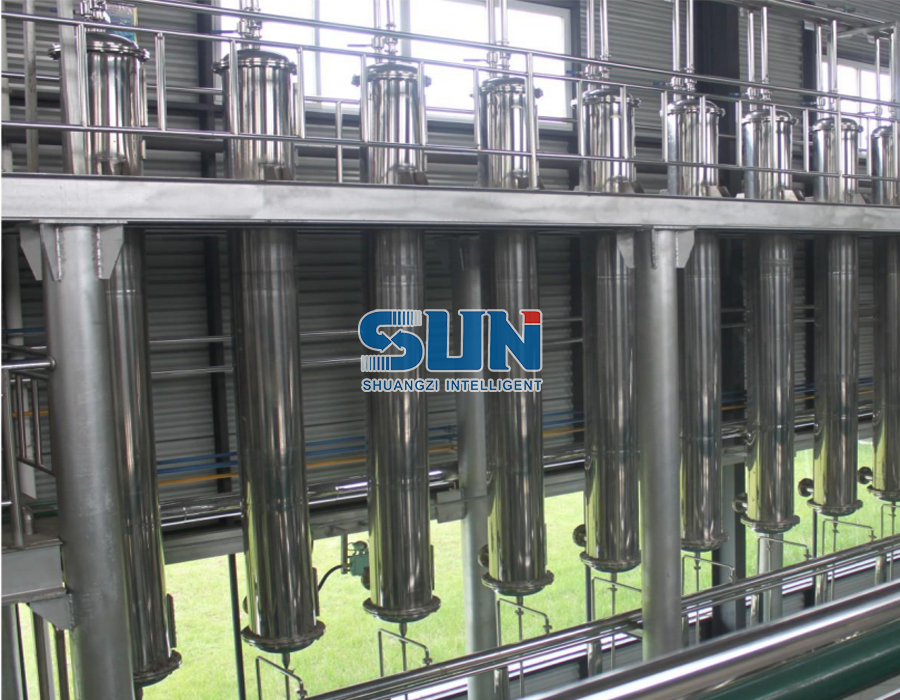
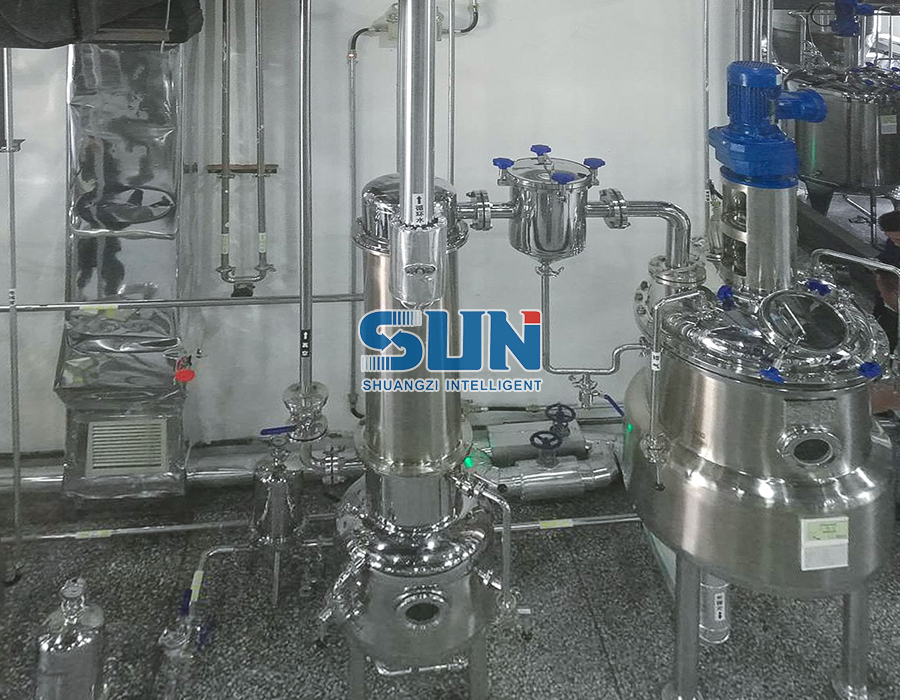
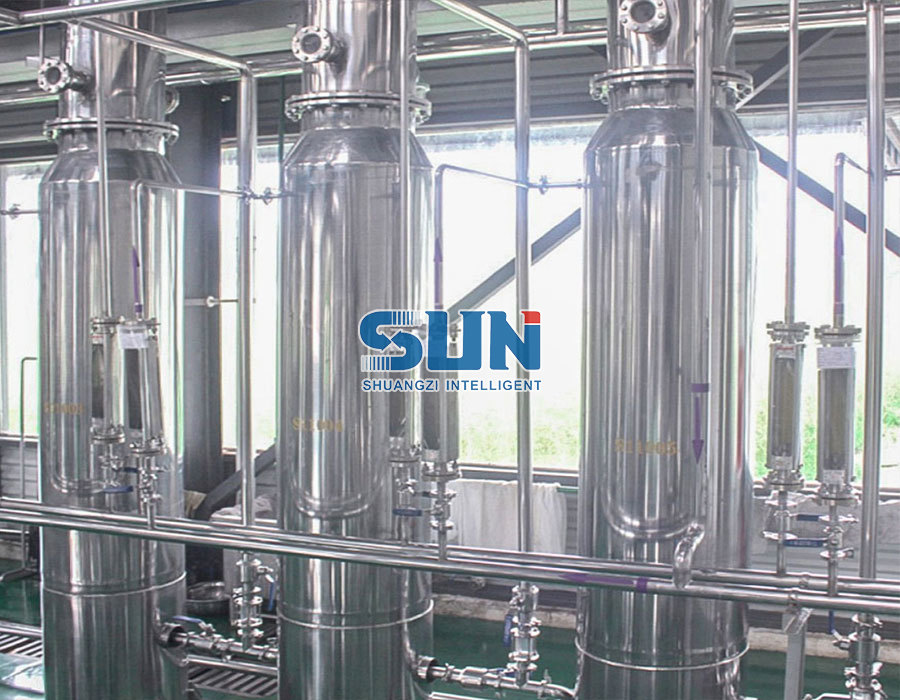
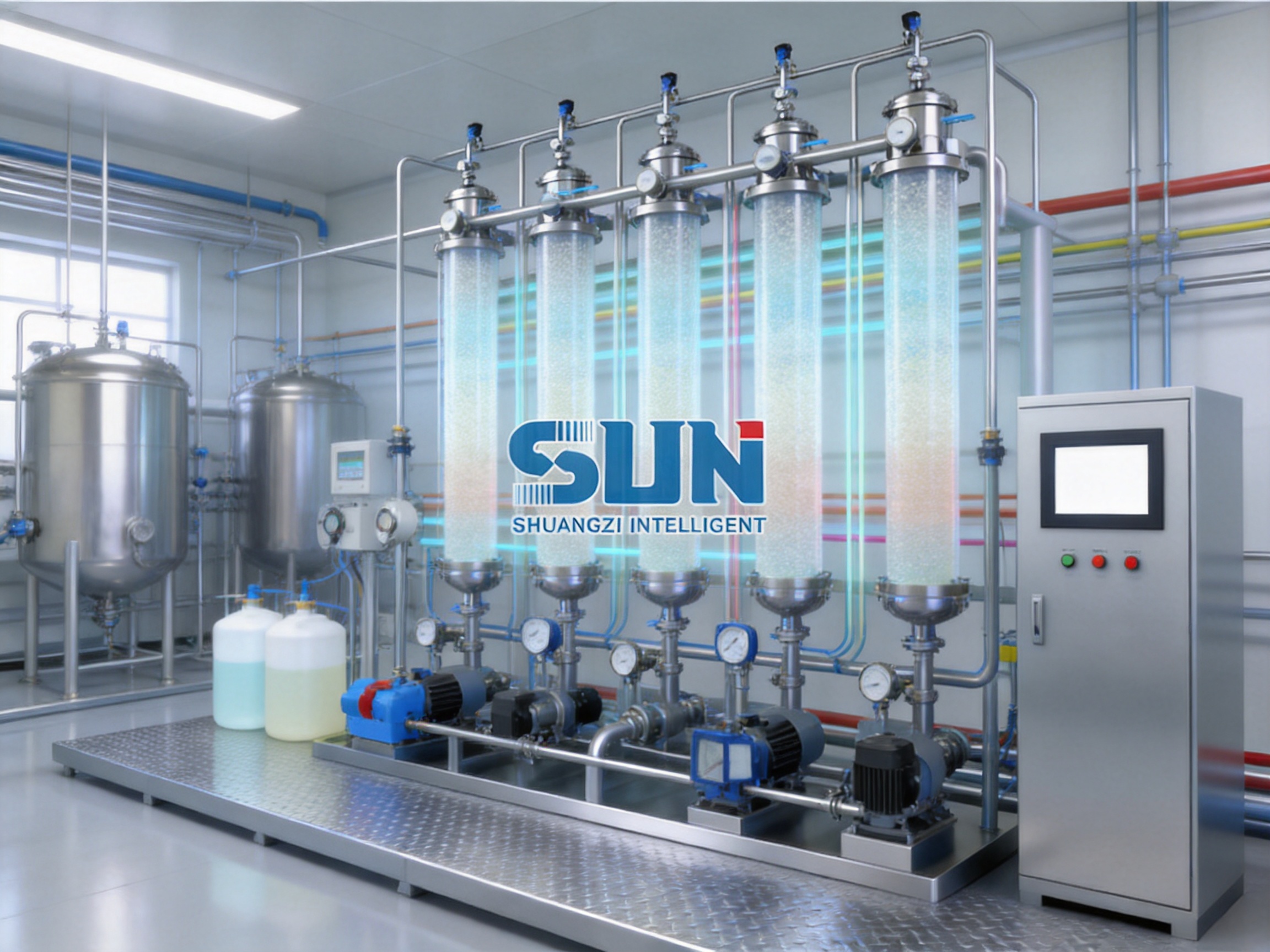
Stainless Steel Chromatography Column Resin Column Separation Equipment
2. Product Overview
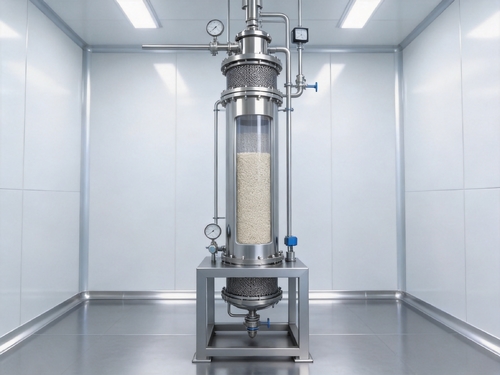
The stainless steel chromatography column is a vertical resin separation vessel intended for the purification and concentration of liquid materials. Its main body is fabricated from stainless steel, with the material grade selected according to the process medium and operating conditions. For weakly acidic materials or applications requiring higher corrosion resistance, SUS316L stainless steel can be used.
The column includes upper and lower stainless steel screens that retain the resin while permitting the process liquid to pass through. The screen mesh can be selected according to the resin particle size and process requirements. The available padding mesh range is generally 100 to 600, while the equipment design can support fine mesh configurations of up to 1000 for suitable applications.
The unit can be fitted with sanitary-grade pipelines and valves. Quick-installation and fastening connections help simplify assembly, maintenance, cleaning, and system modification. Flow meters and control valves allow the operator to adjust the liquid velocity through the resin bed and maintain consistent process conditions.
The column support frame is manufactured from square steel profiles. This provides structural stability for the vertical vessel and allows one or more columns to be arranged into an organized process system. The surface finish can be produced in a mirror or matte style according to customer requirements, process standards, and visual preferences.
For facilities seeking a higher level of process control, the equipment can be supplied with a PLC control system. Automated control may be used to coordinate pumps, valves, flow rates, washing sequences, regeneration operations, liquid routing, alarms, and production records. The precise automation configuration is determined by the process recipe and the number of columns included in the system.
3. Working Principle of Resin Column Separation
The operating principle is based on the different affinity between compounds in the process liquid and the resin packed inside the column. Affinity may be related to adsorption, polarity, ion exchange, molecular size, hydrophobic interaction, or other physical and chemical characteristics, depending on the resin type and process objective.
3.1 Resin packing
Before operation, the selected resin is prepared and packed into the column. The bed must be evenly distributed to avoid channels, dead zones, or uneven flow. The upper and lower screens retain the resin particles while allowing the liquid to move through the bed. Proper packing is essential because poor distribution can reduce contact efficiency and lead to inconsistent product quality.
3.2 Feed and adsorption
The feed liquid enters the column through the inlet pipeline and passes through the resin bed. Target compounds or impurities are retained according to their affinity for the resin. Depending on the process, the desired compound may be adsorbed while unwanted materials pass through, or impurities may be retained while the target compound flows out with the initial liquid.
Flow rate is a critical operating parameter. If the liquid moves too quickly, there may not be enough contact time for effective adsorption. If the flow is too slow, production capacity may fall and the operating cycle may become unnecessarily long. The column’s independent flow meter and valve arrangement help the operator establish suitable process conditions.
3.3 Washing
After the feed stage, the resin bed may be washed with water, buffer, solvent, or another approved liquid. Washing removes residual feed material, weakly retained impurities, and unwanted soluble components. The washing conditions depend on the resin, feed composition, and product requirements.
3.4 Elution
During elution, a suitable liquid is passed through the column to release the adsorbed target compound. The eluent may change the pH, ionic strength, polarity, or other conditions affecting the interaction between the compound and resin. The recovered liquid, known as the eluate, can then be transferred to a subsequent concentration, crystallization, drying, filtration, or formulation stage.
3.5 Regeneration and backwashing
After elution, the resin may be regenerated so that it can be reused. Regeneration removes strongly retained materials and restores the resin to a suitable condition for the next cycle. Backwashing may be used to loosen the resin bed, remove trapped particles, and improve hydraulic performance. The column is designed to support liquid inlet and backwash regeneration operations through its pipeline and screen arrangement.
This cycle can be repeated according to the production schedule. In larger systems, multiple columns may operate in different stages simultaneously, increasing utilization and reducing idle time between cycles.
4. Main Structural and Functional Features
4.1 Stainless steel construction
Stainless steel provides a strong, durable, and cleanable material for industrial separation equipment. It is suitable for many aqueous, food, pharmaceutical, and chemical process liquids. When the medium has weak acidity or more demanding corrosion conditions, SUS316L can be selected to improve material compatibility.
The material choice should always be confirmed against the actual feed composition, cleaning agents, regeneration chemicals, temperature, pressure, and exposure time. A professionally engineered system considers these factors during design rather than treating all process liquids as identical.
4.2 Resistance to organic solvents
The column is designed to resist organic solvents used in appropriate separation and purification processes. This capability expands the range of applications beyond simple water-based adsorption. It can be valuable in plant extraction, pharmaceutical intermediate purification, natural product processing, and other applications where solvent-based elution or cleaning is required.
4.3 Sanitary pipeline connections
Sanitary-grade pipelines and valves help reduce contamination risks and make the system easier to clean. Quick-installation and fastening methods support convenient disassembly, inspection, replacement, and reconfiguration. These connections are particularly useful in plants that process different products or operate several production recipes.
4.4 Flexible surface finishing
The external and internal surface treatment can be provided in a mirror or matte finish. A smooth, well-finished surface supports hygienic production and simplifies visual inspection. The selected finish can be matched to customer standards, facility requirements, and the intended level of cosmetic appearance.
4.5 Stable support frame
The square steel profile bracket provides a stable platform for the column body, pipelines, instruments, and auxiliary equipment. A properly designed frame helps maintain vertical alignment and reduces mechanical stress on process connections. Multi-column systems can be arranged on a common support structure for improved organization and accessibility.
4.6 Fine resin-retaining screens
The upper and lower stainless steel screens retain the resin bed and help distribute the liquid across the column area. Mesh selection is important because the screen must prevent resin loss without creating excessive resistance to flow. The available mesh range of 100 to 600 covers many common resin applications, while finer configurations can be considered for suitable process media.
4.7 PLC automation option
The column can be integrated with PLC-based automation to provide repeatable operating sequences. Automated functions may include feed routing, valve switching, washing, elution, regeneration, flow control, liquid-level coordination, cycle timing, alarm handling, and recipe management. Automation can reduce operator workload and improve consistency between batches.
5. Technical Specifications
The following table summarizes the standard model range. Actual design parameters may be adjusted according to the required capacity, resin type, material compatibility, process pressure, installation space, and system configuration.
| Model | Diameter φ (mm) | Height (mm) | Pressure Resistance (MPa) | Padding Mesh |
|---|---|---|---|---|
| CXZ-100 | 100 | 1,000 | ≤1.0 | 100–600 |
| CXZ-159 | 159 | 1,500 | ≤1.0 | 100–600 |
| CXZ-219 | 219 | 1,500 | ≤1.0 | 100–600 |
| CXZ-273 | 273 | 2,000 | ≤1.0 | 100–600 |
| CXZ-300 | 300 | 2,500 | ≤1.0 | 100–600 |
| CXZ-325 | 325 | 2,500 | ≤0.6 | 100–600 |
| CXZ-400 | 400 | 2,500 | ≤0.6 | 100–600 |
| CXZ-600 | 600 | 3,000 | ≤0.6 | 100–600 |
| CXZ-800 | 800 | 4,000 | ≤0.6 | 100–600 |
| CXZ-1000 | 1,000 | 5,000 | ≤0.6 | 100–600 |
The diameter and height combination determines the approximate resin-bed area and available packing volume. Buyers should not select a model only by vessel size. The correct model also depends on feed throughput, resin loading, target residence time, adsorption capacity, regeneration cycle, product concentration, and the planned number of operating cycles per day.
The stated pressure resistance is a reference design value for the listed equipment. The actual allowable operating pressure must be confirmed against the final engineering documents, material specification, temperature, fittings, seals, instruments, and applicable pressure-vessel requirements.
6. Advantages Compared with Basic or Poorly Integrated Columns
Chromatography columns are available in many forms, but not all products provide the same level of reliability or process adaptability. The principal advantage of this equipment is that it is designed as an industrial process component rather than merely as a simple vertical tank.
6.1 Better process integration
A basic column may be supplied without suitable valves, instruments, support structures, or process routing. Such an arrangement can create installation difficulties and may force the customer to purchase and assemble multiple auxiliary components independently. The stainless steel chromatography column can be configured with sanitary pipelines, independent flow meters, valves, support frames, and automation interfaces, making it easier to incorporate into a complete production line.
6.2 Improved control of flow conditions
Stable flow distribution is essential for adsorption efficiency. Independent flow measurement and regulation allow the operator to manage the process more accurately than with an uncontrolled gravity-fed or manually adjusted arrangement. Better control can contribute to more consistent contact time, resin utilization, and product recovery.
6.3 Greater material flexibility
The option to use stainless steel grades appropriate for the process medium gives the equipment greater adaptability. SUS316L construction can be considered for weakly acidic liquids and applications with higher hygienic or corrosion-resistance requirements. Compatibility with organic solvents also broadens the potential process range.
6.4 Easier cleaning and maintenance
Sanitary connections, accessible valves, and an organized support structure make routine inspection and maintenance more convenient. Quick-installation connections can reduce the time needed to disconnect selected sections of the system. This is especially useful in multiproduct facilities where equipment must be cleaned and prepared between campaigns.
6.5 Support for scale-up
The model range extends from relatively small columns to units with a diameter of 1,000 millimeters and a height of 5,000 millimeters. This gives customers a path from pilot work to larger production equipment. Scale-up still requires process validation, but a consistent equipment family can simplify the transition from development to manufacturing.
6.6 More consistent hygienic design
Equipment manufactured according to GMP-oriented design principles can support the hygienic expectations of pharmaceutical, biotechnology, food, and natural-product applications. The use of stainless steel, sanitary lines, cleanable surfaces, and controlled connections is more appropriate for regulated processing than a general-purpose industrial vessel with difficult-to-clean areas.
6.7 Automation readiness
Manual operation may be sufficient for a small pilot process, but larger production systems benefit from automated sequencing. PLC integration can improve repeatability, reduce valve-switching errors, support safety interlocks, and provide a clearer record of operating steps. Automation readiness is a practical advantage for customers planning future capacity expansion.
7. Applications in Different Industries
7.1 Plant extraction
Plant extracts often contain active ingredients together with pigments, polysaccharides, tannins, proteins, oils, sugars, and other natural substances. Resin column separation can selectively adsorb desired plant compounds or remove unwanted components. It is commonly considered for the purification, decolorization, and enrichment of botanical extracts.
In a plant extraction line, the chromatography column may be installed after extraction and primary filtration. The extract can be clarified before entering the resin bed. Following adsorption and washing, the target compound can be eluted and sent to concentration, drying, crystallization, or formulation equipment.
7.2 Pharmaceutical processing
Pharmaceutical applications may require the removal of color bodies, residual impurities, unwanted organic matter, or inactive fractions. Stainless steel construction and sanitary connections are valuable in these environments because equipment must support hygienic production, cleaning, inspection, and documentation requirements.
The final process must be validated for the specific product. Resin compatibility, extractables, cleaning agents, elution solvents, and material contact surfaces should be evaluated before commercial operation.
7.3 Biotechnology and enzyme production
Biotechnology processes frequently involve complex liquids containing proteins, enzymes, metabolites, salts, and cell-derived materials. Chromatography can provide selective purification after fermentation, clarification, or other pretreatment stages. The column may be used as part of a larger downstream processing train that includes filtration, concentration, buffer adjustment, and drying.
7.4 Food processing
Food and natural ingredient manufacturers may use resin separation for decolorization, purification, removal of undesirable flavors, and enrichment of functional ingredients. The hygienic design, cleanable surfaces, and stainless steel construction make the column suitable for food-related process environments when the complete system is designed with appropriate food-contact materials and procedures.
7.5 Water and beverage production
In water treatment and beverage production, adsorption columns can be used to remove specific organic substances, color, taste-related compounds, or other impurities. The correct resin and process sequence depend on the liquid composition and the desired quality standard. A multi-column system can provide greater flexibility when different treatment stages are required.
7.6 Alcoholic beverage brewing
Brewing and alcoholic beverage operations may require the adjustment of color, aroma, flavor, or unwanted dissolved compounds. Chromatographic treatment can be considered as one part of a broader purification or refinement process. Careful control of residence time and resin regeneration is required to protect the desired characteristics of the beverage.
7.7 Petrochemical and chemical processing
Some chemical and petrochemical processes use adsorption and resin technologies to separate or purify dissolved compounds. In these applications, material compatibility, solvent resistance, pressure rating, temperature, and hazardous-area requirements must be reviewed in detail. The stainless steel column can be customized within the limits of the applicable process and safety design.
7.8 Medical experiments and pilot research
Research institutions and pilot plants can use smaller chromatography columns to evaluate resin selection, adsorption capacity, elution conditions, and scale-up behavior. Pilot testing provides valuable process data before a larger production system is installed. The equipment may also support process development in pharmaceutical, biotechnology, food, and botanical research.
8. Manufacturing and Engineering Strengths
Zhejiang Shuangzi Intelligent Equipment Co., Ltd. is a professional biology and medical equipment enterprise founded in 2007. The company focuses on process technology, automation engineering design, equipment manufacturing, matching procurement, installation, commissioning, and complete system integration.
The company operates on a production area of approximately 16,706 square meters and has a structure area of approximately 17,800 square meters. These facilities support the manufacture of process equipment and the assembly of complete systems for plant extraction, biological fermentation, pharmaceutical engineering, natural food processing, and environmental applications.
8.1 EPC and EPCM capability
One of the company’s important strengths is its EPC and EPCM-oriented project capability. Customers may require more than a single chromatography column. They may need process design, equipment selection, piping coordination, control system planning, installation, commissioning, and production-line integration. An engineering partner with experience across these stages can help reduce the coordination burden between different suppliers.
The company can provide process design, equipment design, manufacturing, installation, line debugging, and turnkey project services. This is particularly valuable when the chromatography column is part of a complete extraction, fermentation, purification, concentration, or drying line.
8.2 Broad process equipment experience
The company’s mature product range includes vacuum low-temperature drying equipment, fermentation systems, evaporation and concentration equipment, extraction systems, separation and crystallization equipment, filtration equipment, process vessels, and related equipment. This broad range allows the chromatography column to be considered together with upstream and downstream operations.
For example, a plant extraction project may require extraction tanks, filtration, resin separation, evaporation, crystallization, and vacuum drying. A biological process may require fermentation, clarification, chromatography, concentration, and final drying. Coordinating these stages through one engineering organization can improve layout planning and process compatibility.
8.3 Pilot and research support
The company has a pilot production workshop and research and development platform designed to support process development and GMP-oriented requirements. Pilot capability is important because resin separation performance depends on the actual feed composition, resin characteristics, operating velocity, cycle time, and regeneration method.
Pilot work can help determine whether a selected column diameter, bed height, resin type, and flow range are appropriate before larger equipment is specified. It can also help identify pretreatment needs, such as clarification, pH adjustment, prefiltration, or concentration.
8.4 Advanced welding and finishing equipment
The company has introduced advanced welding and finishing equipment, including plasma argon arc welding machines, plasma cutting machines, and CAM CNC machining centers. These tools support the fabrication of stainless steel process equipment with controlled dimensions, consistent joints, and refined surface treatment.
For sanitary process equipment, welding and finishing quality are especially important. Poorly finished weld areas may create rough surfaces, cleaning difficulties, or locations where residues can accumulate. Professional fabrication practices help improve equipment cleanliness, mechanical integrity, and long-term serviceability.
8.5 Integrated automation design
Modern separation systems require coordination between mechanical equipment, instruments, process valves, pumps, and control software. The company’s focus on automation engineering allows the chromatography column to be supplied as part of a controlled system rather than as an isolated vessel. The automation level can be adapted to the customer’s production scale and process requirements.
8.6 Customized project execution
Every chromatography application is affected by the feed material, target compound, resin, flow rate, pressure, temperature, solvent, cleaning method, and production schedule. The company can design equipment and system arrangements according to the customer’s process information. Customization may include column dimensions, material grade, surface finish, pipeline layout, valve selection, instrumentation, support frame, control system, and multi-column configuration.
9. Multi-Column System Design
For industrial production, several columns can be installed on a common rack or arranged as a coordinated system. Each column may be assigned to a particular operating function. One column can receive feed while another is being washed, a third is undergoing elution, and a fourth is being regenerated or held in standby.
This arrangement can improve production continuity and make better use of pumps, tanks, resin, and operators. It can also reduce the time lost when a single column must complete every step before the next batch begins.
A multi-column system should be designed with clear process routing. Valve identification, flow direction, sampling points, drain arrangements, and instrument locations should be easy to understand. The support frame should provide access for inspection and maintenance without creating unsafe working positions.
When PLC automation is included, the control logic should reflect the validated process sequence. Interlocks can help prevent incorrect valve combinations, excessive pressure, insufficient liquid supply, or operation before the resin bed is ready. Alarm and emergency-stop functions should be coordinated with the overall plant safety system.
10. Selection Guidelines for Buyers
10.1 Define the process objective
The first step is to identify whether the column will be used for adsorption of a target compound, removal of impurities, decolorization, desalting, purification, enrichment, or another purpose. The process objective determines the resin type and influences the required bed volume.
10.2 Analyze the feed liquid
Important feed information includes solids content, viscosity, pH, temperature, solvent composition, target concentration, impurity profile, microbial condition, and expected flow rate. Suspended solids should generally be removed before the liquid enters the resin bed because they may block the screens or reduce resin performance.
10.3 Select the resin and mesh
The resin manufacturer’s recommendations should be reviewed for particle size, operating pressure, chemical compatibility, regeneration conditions, and maximum flow velocity. The screen mesh must retain the resin while allowing efficient liquid passage. A mismatch between resin particle size and screen specification can cause resin loss or excessive pressure drop.
10.4 Calculate capacity and cycle time
Column selection should consider resin loading, bed depth, feed concentration, adsorption capacity, breakthrough point, washing volume, elution volume, regeneration time, and production schedule. The largest available vessel is not automatically the best option. A properly sized system balances capacity, contact time, capital cost, and operating efficiency.
10.5 Confirm material compatibility
The stainless steel grade, seals, gaskets, valves, instruments, and pipeline materials must be compatible with the process liquid, organic solvents, cleaning chemicals, and regeneration agents. Weakly acidic materials may require SUS316L construction. More aggressive media may require additional material review by the engineering team.
10.6 Determine the automation level
A small pilot column may be operated manually, while a production system may benefit from PLC automation. Buyers should consider the number of process steps, frequency of operation, labor availability, batch documentation, recipe repeatability, and future expansion plans when choosing the control configuration.
10.7 Plan cleaning and maintenance
Cleaning access, drainage, sampling, screen inspection, resin replacement, valve maintenance, and instrument calibration should be considered during the layout stage. Equipment that is easy to maintain generally provides better long-term availability than a design that focuses only on initial purchase price.
11. Installation, Operation, and Maintenance Considerations
The column should be installed on a level and structurally suitable foundation. The support frame must be capable of carrying the vessel, resin, liquid inventory, connected piping, and operating loads. Process pipelines should be installed without imposing excessive external forces on the column nozzles.
Before the first production cycle, the system should be inspected for cleanliness, correct valve orientation, secure connections, instrument installation, and proper drainage. The resin should be prepared and packed according to the resin supplier’s instructions. Air entrapment, uneven settling, and channel formation should be minimized.
During operation, the operator should monitor flow rate, pressure, liquid clarity, temperature, pH, and other parameters relevant to the process. Sudden pressure increases may indicate screen blockage, resin compaction, excessive solids, or an incorrect operating condition. Excessive flow may reduce separation efficiency or disturb the resin bed.
After use, the column should be washed and regenerated according to the validated procedure. Cleaning liquids must be compatible with the column material, resin, seals, and downstream wastewater treatment system. The equipment should be drained when appropriate, and any unused liquid should not be allowed to remain in the vessel for an unsuitable period.
Routine maintenance may include inspection of screens, valves, flow meters, seals, pipelines, support fasteners, weld areas, surface condition, and control components. A documented maintenance schedule can help identify wear before it affects production.
12. Quality, GMP, and Process Documentation
Pharmaceutical, biotechnology, and food manufacturers often need documented information about equipment materials, fabrication, inspection, testing, cleaning, and commissioning. The level of documentation should reflect the customer’s quality system and applicable regulations.
GMP-oriented design generally emphasizes cleanable surfaces, hygienic connections, suitable materials, controlled fabrication, drainage, inspection access, and repeatable operation. A chromatography column used in a regulated process should be evaluated as part of the complete system, including resin preparation, upstream clarification, downstream collection, cleaning, and waste handling.
Typical project documentation may include equipment drawings, material information, process flow diagrams, pipeline and instrumentation diagrams, operating instructions, maintenance guidance, inspection records, pressure-test records where applicable, and commissioning documentation. The specific package depends on the customer’s project requirements.
13. Sustainability and Operating Efficiency
Resin separation can help improve product recovery by selectively concentrating valuable components and reducing the amount of unwanted material carried into downstream processing. More effective purification may lower the load on evaporation, drying, crystallization, or final polishing equipment.
Operating efficiency also depends on resin lifetime, eluent consumption, wash volume, regeneration effectiveness, pump energy, and cycle utilization. A well-designed multi-column system can reduce idle periods and make better use of process utilities.
Waste streams should be evaluated during process development. Washing liquids, regeneration solutions, spent feed fractions, and eluates may require treatment, recycling, or controlled disposal. Integrating the column into a complete process design makes it easier to address these streams from the beginning.
14. Frequently Asked Questions
Q1: What is a stainless steel chromatography column?
A stainless steel chromatography column is a vertical process vessel packed with resin or another separation medium. It is used to adsorb, purify, decolorize, enrich, or remove selected compounds from a liquid mixture. The column includes resin-retaining screens, process connections, valves, and flow-control components.
Q2: Which industries can use this equipment?
The equipment can be used in biotechnology, pharmaceutical processing, plant extraction, enzyme production, food processing, water treatment, beverage production, alcoholic beverage brewing, chemical processing, petrochemical applications, and medical or pilot-scale research.
Q3: Can the column handle organic solvents?
The equipment is designed to resist organic solvents used in suitable separation processes. However, the actual solvent, concentration, temperature, seals, gaskets, resin, and cleaning procedure must be reviewed before operation to confirm compatibility.
Q4: When should SUS316L stainless steel be selected?
SUS316L is appropriate for many applications involving weakly acidic liquids or higher corrosion-resistance and hygienic requirements. The final material selection should be based on the complete chemical and operating profile of the process.
Q5: What does the padding mesh specification mean?
The padding mesh refers to the mesh size of the screens that retain the resin inside the column. The correct mesh depends on the resin particle size and liquid flow requirements. A suitable screen prevents resin loss while supporting effective drainage and distribution.
Q6: Can several columns be connected into one system?
Yes. Several columns can be installed on a common support frame or arranged as a coordinated system. Independent flow meters, valves, and pipelines allow different columns to perform feed, washing, elution, regeneration, or standby functions.
Q7: Is PLC automation available?
Yes. The column can be equipped with a PLC control system according to the customer’s process requirements. Automation may coordinate valves, pumps, flow rates, cycle timing, alarms, and operating sequences.
Q8: How should the correct model be selected?
Model selection should consider feed throughput, resin type, bed volume, target compound concentration, required contact time, operating pressure, process temperature, cycle duration, and the number of columns required. Engineering review is recommended before final selection.
Q9: Can the equipment be used for pilot production?
Yes. The smaller models are suitable for pilot research and process development, while the broader model range supports scale-up toward production. Pilot results should be used to confirm resin behavior, flow conditions, regeneration methods, and expected recovery.
Q10: What services can the manufacturer provide?
The manufacturer can provide process technology support, automation engineering, equipment design, manufacturing, matched procurement, installation, commissioning, system integration, and turnkey project services. The exact scope depends on the project requirements.
Q11: Why is pretreatment important before chromatography?
Pretreatment can remove suspended solids, reduce viscosity, adjust pH, and stabilize the feed liquid before it enters the resin bed. Effective pretreatment helps protect the screens and resin, reduce pressure increase, and improve separation consistency.
Q12: How does a professional column improve production reliability?
A professionally engineered column combines suitable materials, stable support, controlled flow, sanitary connections, appropriate screens, accessible maintenance points, and optional automation. These features help reduce operating variation and simplify integration into the wider production line.
15. Conclusion
Stainless steel chromatography column equipment is a practical solution for the selective purification and separation of liquid materials. Its operating principle is based on the different affinity between process compounds and the resin packed in the column. Through controlled adsorption, washing, elution, and regeneration, the equipment can support the recovery of valuable active ingredients and the removal of unwanted impurities.
The product’s main advantages include stainless steel construction, resistance to suitable organic solvents, optional SUS316L material, sanitary pipeline connections, adjustable surface finishes, stable square-profile supports, resin-retaining stainless steel screens, independent flow meters and valves, and optional PLC automation. The model range supports pilot development as well as larger production systems.
Compared with a basic standalone vessel, an integrated chromatography column offers better process control, easier maintenance, stronger hygienic compatibility, and greater potential for multi-column operation. Its value is further increased when it is engineered together with upstream extraction, fermentation, filtration, concentration, crystallization, drying, or other downstream operations.
Zhejiang Shuangzi Intelligent Equipment Co., Ltd. combines equipment manufacturing with process engineering, automation, installation, commissioning, and turnkey project capabilities. Its production facilities, pilot workshop, research and development platform, advanced welding equipment, plasma cutting technology, CAM CNC machining center, and experience with biological and medical process systems provide a strong foundation for customized separation projects.
For buyers, the best equipment choice should be based on the complete process rather than vessel dimensions alone. Feed composition, resin characteristics, flow rate, pressure, material compatibility, cleaning, regeneration, automation, and future production capacity should all be considered. With suitable engineering and validation, the stainless steel chromatography column can become a reliable core unit in pharmaceutical, food, biotechnology, plant extraction, and chemical purification systems.
References
1. General principles of industrial adsorption and resin-based chromatographic separation.
2. Good Manufacturing Practice principles for pharmaceutical and biotechnology equipment design.
3. Stainless steel material selection guidance for hygienic process equipment.
4. Fundamentals of ion-exchange, adsorption, and polymeric resin separation technologies.
5. Process engineering practices for liquid purification, regeneration, and multi-column systems.
6. Hygienic design principles for food, beverage, pharmaceutical, and biological processing equipment.
7. General guidance for pressure, flow distribution, resin packing, and scale-up in chromatography columns.