
 英语
英语 俄语
俄语Content
- 1 Product Overview: What a Vacuum Flash Evaporator Does
- 2 Core Working Principle
- 3 Key Technical Parameters
- 4 Major Advantages Over Conventional Concentration Equipment
- 5 Applications in Key Industries
- 6 Design Features That Improve Real-World Performance
- 7 Advanced Manufacturing Strengths
- 8 Engineering and Turnkey Project Capability
- 9 Why Stainless Steel Construction Matters
- 10 Operational Benefits for Production Managers
- 11 Comparison With Common Competing Solutions
- 12 Maintenance and Cleaning Considerations
- 13 Customization Options and Project Adaptation
- 14 Quality, Reliability, and Long-Term Value
- 15 Q&A Section
- 15.1 Q1: What is the main purpose of a stainless steel vacuum flash evaporator?
- 15.2 Q2: Why is vacuum flash evaporation suitable for heat-sensitive materials?
- 15.3 Q3: What is the evaporation capacity range of this equipment?
- 15.4 Q4: What are the main components of the system?
- 15.5 Q5: Can the evaporator recover organic solvents?
- 15.6 Q6: How does this equipment compare with traditional open evaporation?
- 15.7 Q7: Is the equipment suitable for food production?
- 15.8 Q8: Is the equipment suitable for pharmaceutical and biological processes?
- 15.9 Q9: Why is manufacturing quality important for vacuum equipment?
- 15.10 Q10: Can the evaporator be included in a turnkey project?
- 16 Conclusion
- 17 References
- 18 Product: Stainless Steel Vacuum Flash Evaporator
Modern concentration processes demand more than simple solvent removal. Producers in food, pharmaceutical, biological fermentation, plant extraction, and chemical recovery industries increasingly require equipment that can reduce moisture or solvent content while protecting active compounds, improving energy efficiency, supporting hygienic operation, and fitting smoothly into automated production lines. The stainless steel vacuum flash evaporator is designed for exactly this purpose. Based on the flash evaporation principle, it rapidly vaporizes solvent under reduced pressure after preheating the feed material close to its boiling point, achieving efficient concentration at relatively low temperatures.
This equipment is especially valuable for heat-sensitive materials. Fruit juice, dairy products, botanical extracts, herbal concentrates, biological agents, fermentation broth, and solvent-containing process streams can lose quality when exposed to high temperatures for extended periods. A vacuum flash evaporator reduces the boiling point of the solvent and shortens thermal exposure, helping preserve aroma, color, nutrients, pharmacological activity, and functional ingredients. Compared with conventional atmospheric concentration equipment, it offers faster evaporation, lower operating temperature, improved product protection, and better integration with solvent recovery systems.
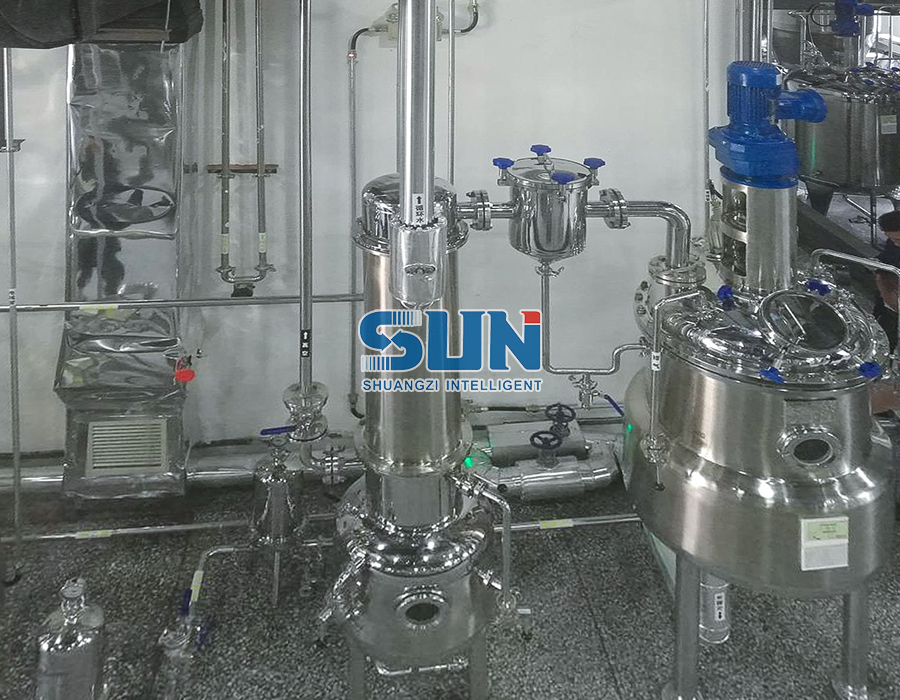
The stainless steel vacuum flash evaporator described here is suitable for evaporation capacities from 300 L/h to 5000 L/h, covering laboratory-scale process expansion, pilot production, and industrial production needs. Its main components include a preheater, flash chamber, condenser, vacuum pump, separation devices, process piping, instruments, valves, and control systems. When engineered as part of a complete production line, it can be connected with extraction tanks, fermentation systems, filtration units, storage vessels, crystallization equipment, drying equipment, and clean-in-place systems.
Beyond the equipment itself, the value of a vacuum flash evaporator depends heavily on engineering quality, stainless steel fabrication, welding accuracy, process design, control logic, installation capability, and after-sales support. Zhejiang Shuangzi Intelligent Equipment Co., Ltd. provides these capabilities through its long-term focus on process technology, automation engineering design, equipment manufacturing, matching procurement, installation, equipment system integration, and turnkey project services. Founded in 2007, the company has accumulated practical experience in plant extraction, bio-fermentation, pharmaceutical engineering, natural food processing, energy conservation, and environmental protection projects.
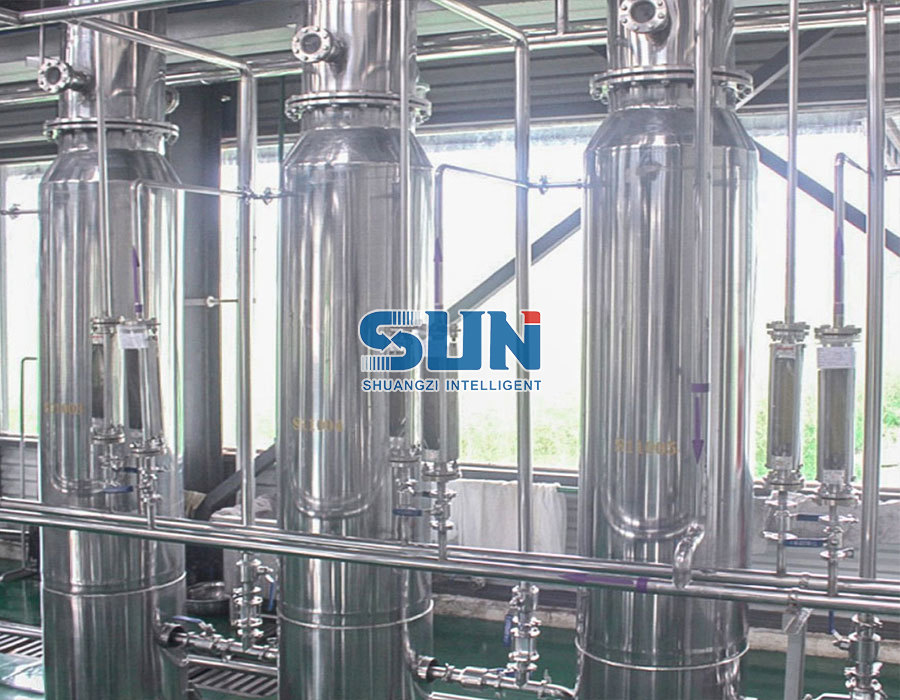
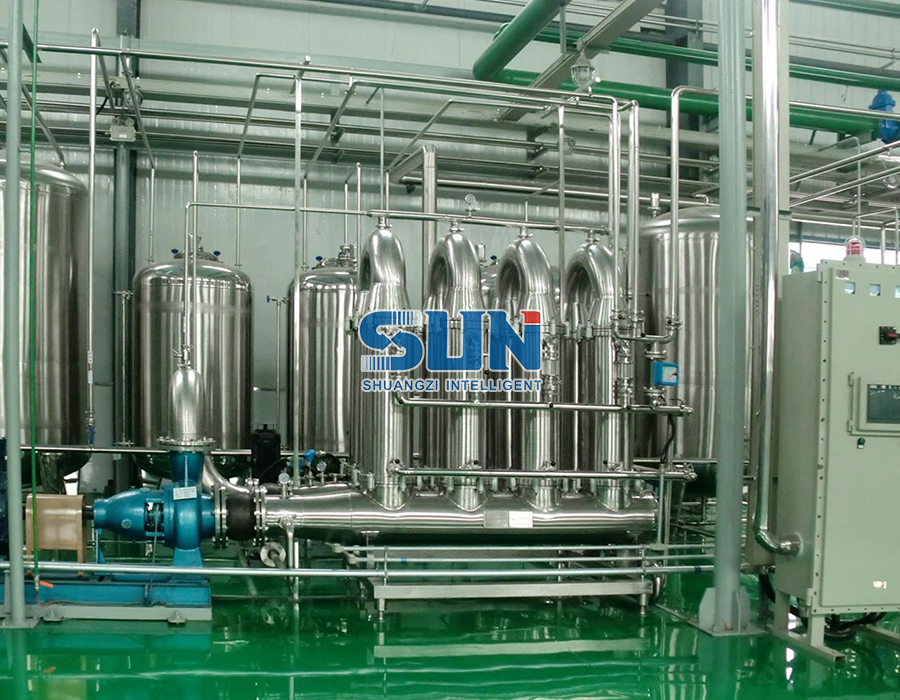
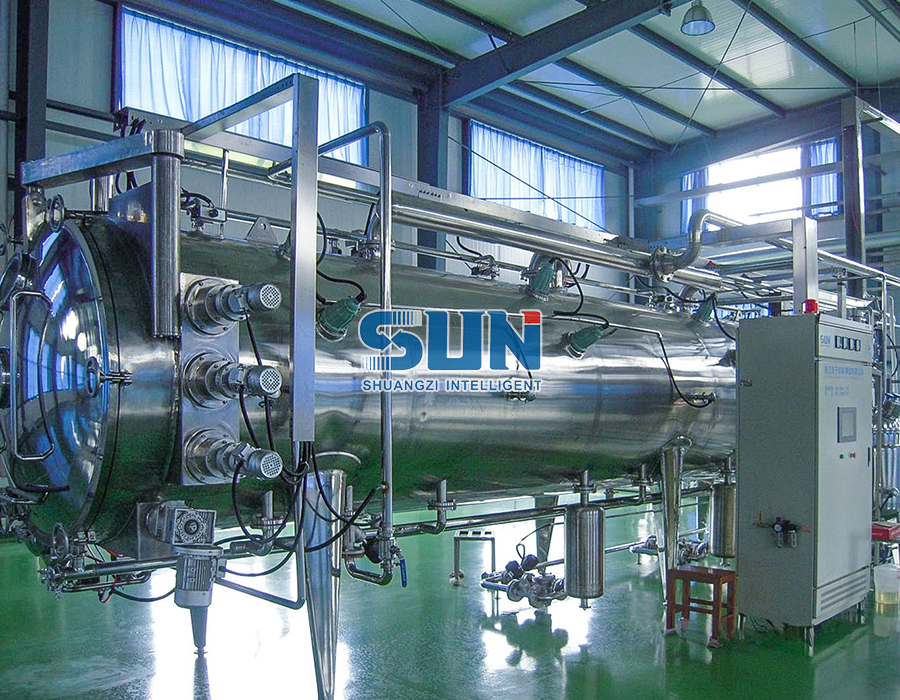
Stainless Steel Vacuum Flash Evaporator 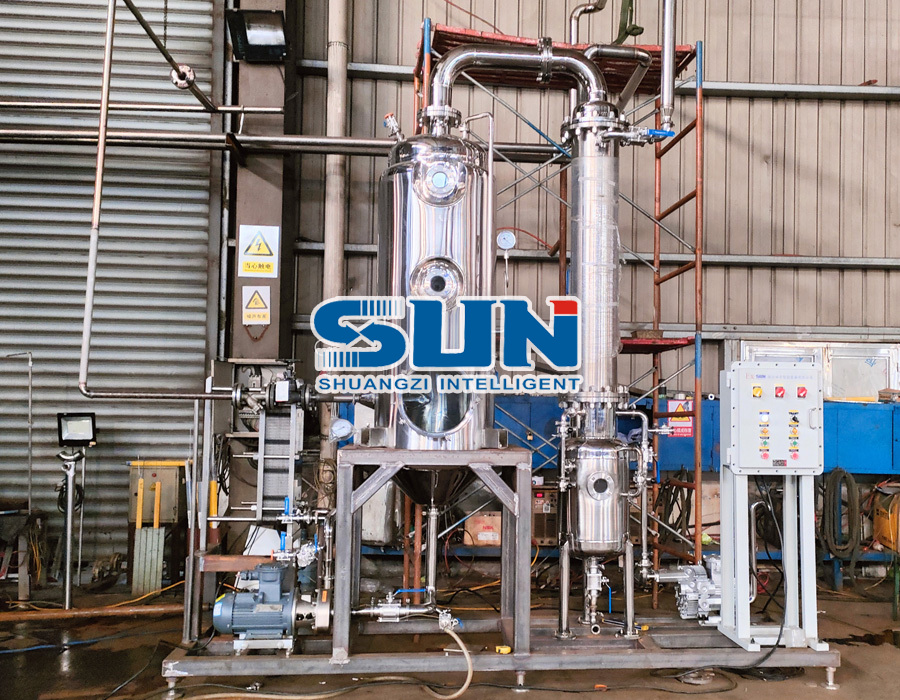
Product Overview: What a Vacuum Flash Evaporator Does
A vacuum flash evaporator is an efficient liquid concentration machine that reduces solvent content and increases solid concentration by using a sudden pressure drop. The feed material is first heated in a preheater to a temperature close to the boiling point under the intended process conditions. It then enters a flash chamber where the pressure is significantly lower than the saturated vapor pressure of the liquid. Because the pressure drops rapidly, part of the solvent instantly vaporizes. The vapor is guided to a condenser for condensation and recovery, while the concentrated liquid remains in the chamber or flows onward for further processing.
The term “flash” refers to the rapid phase change that occurs when hot liquid encounters low pressure. Instead of slowly boiling in a large open vessel, the material undergoes instantaneous vapor generation. This short residence time is one of the most important advantages of the technology. In many traditional evaporators, material remains under heat for longer periods, which can cause degradation, discoloration, flavor loss, precipitation, polymerization, or unwanted chemical change. The flash process minimizes these problems by reducing both temperature stress and exposure duration.
The stainless steel construction supports hygienic processing and corrosion resistance. Stainless steel surfaces are widely preferred in food, medicine, and biological processing because they are durable, cleanable, compatible with sanitary design, and resistant to many water-based and organic process media. When produced with high-quality welding, polishing, and finishing methods, stainless steel evaporators can meet strict production requirements for cleanliness, process safety, and long service life.
In practical terms, this equipment is used to make a liquid more concentrated. Juice can be concentrated before drying or filling. Dairy liquids can be reduced in volume. Botanical extracts can be thickened before alcohol precipitation, drying, or formulation. Chinese herbal extract can be concentrated while preserving active ingredients. Fermentation broth can be reduced before downstream separation. Organic solvent mixtures can be processed for recovery. Wastewater streams can be reduced in volume to lower treatment load. In each case, the objective is not merely evaporation but controlled evaporation with product quality protection.
Core Working Principle
The working principle of the stainless steel vacuum flash evaporator can be divided into four main stages: preheating, flashing, vapor separation, and condensation. Each stage affects equipment performance, energy consumption, product stability, and final concentration quality.
Preheating Stage
The feed liquid is pumped into a preheater where thermal energy is transferred to the material. The preheater raises the liquid temperature close to its boiling point under the selected operating pressure. Depending on the process design, heating can be provided by steam, hot water, thermal oil, or recovered heat from another part of the production system. The preheater is engineered to provide efficient heat transfer while avoiding local overheating that could damage sensitive components.
For materials such as plant extracts, fruit concentrates, or pharmaceutical intermediates, the design of the preheater is particularly important. Uniform heating helps prevent fouling, scorching, or uneven concentration. High-quality fabrication and appropriate flow design ensure that the material receives the necessary heat without excessive residence time.
Flash Evaporation Stage
After preheating, the liquid enters the flash chamber. The chamber is maintained under vacuum, meaning its internal pressure is lower than atmospheric pressure. Under this lower pressure, the solvent’s boiling point decreases. The heated liquid becomes thermodynamically unstable and part of the solvent immediately vaporizes. This instant evaporation removes heat from the liquid, causing rapid cooling and helping protect heat-sensitive substances.
The flash chamber must be properly sized and designed to allow stable vapor-liquid separation. If vapor velocity is too high, droplets may be entrained into the vapor outlet, reducing product yield and potentially contaminating recovered solvent. A well-engineered flash chamber uses appropriate geometry, vapor space, demisting structures, and discharge arrangements to promote efficient separation.
Vapor Condensation Stage
The solvent vapor generated during flashing is directed to a condenser. Cooling water, chilled water, or another cooling medium condenses the vapor back into liquid form. In water-based applications, the condensate can be discharged, recovered, or reused depending on process requirements. In organic solvent applications, condensation is essential for solvent recovery, environmental protection, and operational safety.
A properly designed condenser improves vacuum stability and reduces solvent loss. It also supports lower energy consumption by efficiently removing vapor load. For volatile organic solvents, condenser selection, sealing quality, vacuum pump compatibility, and explosion prevention measures may be considered during engineering design.
Vacuum Generation and Control
The vacuum pump maintains the low-pressure environment inside the flash chamber and condensation system. Stable vacuum is critical because evaporation temperature depends directly on pressure. If pressure fluctuates, product quality and concentration consistency can be affected. Advanced process control helps maintain a steady vacuum level, feed rate, temperature, and discharge concentration.
For industrial users, the value of vacuum control is not limited to evaporation efficiency. Stable operation reduces operator workload, improves batch repeatability, supports documentation, and enables integration with automated production management systems. This is especially important in pharmaceutical, biological, and food manufacturing environments where process validation and consistency are highly valued.
Key Technical Parameters
The following table summarizes the main parameter range provided for the stainless steel vacuum flash evaporator series. Actual design can be customized according to material characteristics, solvent type, target concentration, production capacity, heating source, cooling conditions, and project layout.
Item |
Parameter |
Practical Meaning |
Model Range |
SZN-300-HSK to SZN-5000-HSK |
Suitable for pilot, medium, and industrial production capacities |
Evaporating Volume |
300 L/h to 5000 L/h |
Supports scalable concentration requirements for different production lines |
Main Material |
Stainless Steel |
Provides hygienic performance, corrosion resistance, and long service life |
Main Components |
Preheater, Flash Chamber, Condenser, Vacuum Pump |
Forms a complete low-pressure evaporation and recovery system |
Typical Applications |
Food, Medicine, Biological Processing, Chemical Recovery |
Applicable to heat-sensitive and solvent-containing materials |
Major Advantages Over Conventional Concentration Equipment
Lower Temperature Processing
One of the strongest competitive advantages of a vacuum flash evaporator is low-temperature concentration. Because the system works under reduced pressure, solvent evaporation can occur at a lower temperature than atmospheric boiling. This is highly beneficial for materials that contain unstable nutrients, volatile aroma compounds, enzymes, proteins, natural pigments, herbal active ingredients, or biological substances.
In many food and medicine applications, quality loss is not caused only by temperature but also by the duration of heat exposure. Flash evaporation provides rapid vaporization and cooling, greatly reducing the time that sensitive material spends at elevated temperature. Compared with open boiling pans or slow batch concentrators, it can produce a more stable concentrate with better color, aroma, and functional integrity.
High Evaporation Efficiency
The flash principle allows rapid solvent release after preheating. This makes the evaporation process efficient and responsive. When properly designed, the equipment can handle continuous or semi-continuous operation, reducing production waiting time and increasing line throughput. The 300 L/h to 5000 L/h evaporation range gives users flexibility to match capacity with production requirements.
Compared with competitors that provide standard equipment without deep process adaptation, a custom-engineered flash evaporator can deliver more reliable output. Material viscosity, foaming tendency, solid content, solvent composition, and heat sensitivity all influence evaporation performance. Zhejiang Shuangzi Intelligent Equipment Co., Ltd. has experience in extraction, fermentation, concentration, separation, crystallization, filtration, and drying systems, enabling better process matching rather than isolated equipment supply.
Reduced Energy Consumption
Energy efficiency is a central concern in modern manufacturing. The vacuum flash evaporator supports lower energy consumption through efficient heat transfer, controlled preheating, fast evaporation, and condensate recovery. When integrated with a broader process line, heat recovery strategies can be applied to reduce total utility demand. For example, waste heat from one step may support preheating, and condensate may be reused depending on process standards.
Energy savings are not only about the evaporator body. They depend on correct engineering of pumps, condensers, vacuum systems, insulation, piping, automation, and process scheduling. A manufacturer with engineering design and system integration strength can optimize the entire concentration unit rather than selling a basic machine. This is a major advantage for customers seeking long-term operating economy.
Product Quality Protection
For food products, flash evaporation can help preserve natural taste, aroma, and color. For plant extracts, it can help protect active compounds. For pharmaceutical and biological materials, it can reduce the risk of thermal degradation. For chemical streams, it can limit unwanted side reactions. The combination of vacuum operation, short residence time, and rapid cooling makes the equipment suitable for sensitive processes where quality is a priority.
Competitor equipment may offer evaporation capacity but fail to address quality preservation in detail. A stainless steel vacuum flash evaporator designed with appropriate preheater structure, chamber volume, vacuum control, vapor-liquid separation, and cleanability can provide a more dependable solution for high-value materials.
Solvent Recovery Capability
The condenser allows vaporized solvent to be recovered as liquid. In food and medicine applications, water vapor can be condensed for proper discharge or reuse according to plant policy. In organic solvent applications, recovery is especially important because it reduces solvent purchase cost, lowers environmental emissions, improves workplace safety, and supports regulatory compliance.
For production involving ethanol, water-alcohol mixtures, or other organic solvents, condenser efficiency and system sealing are essential. Equipment made with strict welding, accurate assembly, and suitable vacuum design can reduce leakage and solvent loss. This improves both economic and environmental performance.
Compact and Flexible Integration
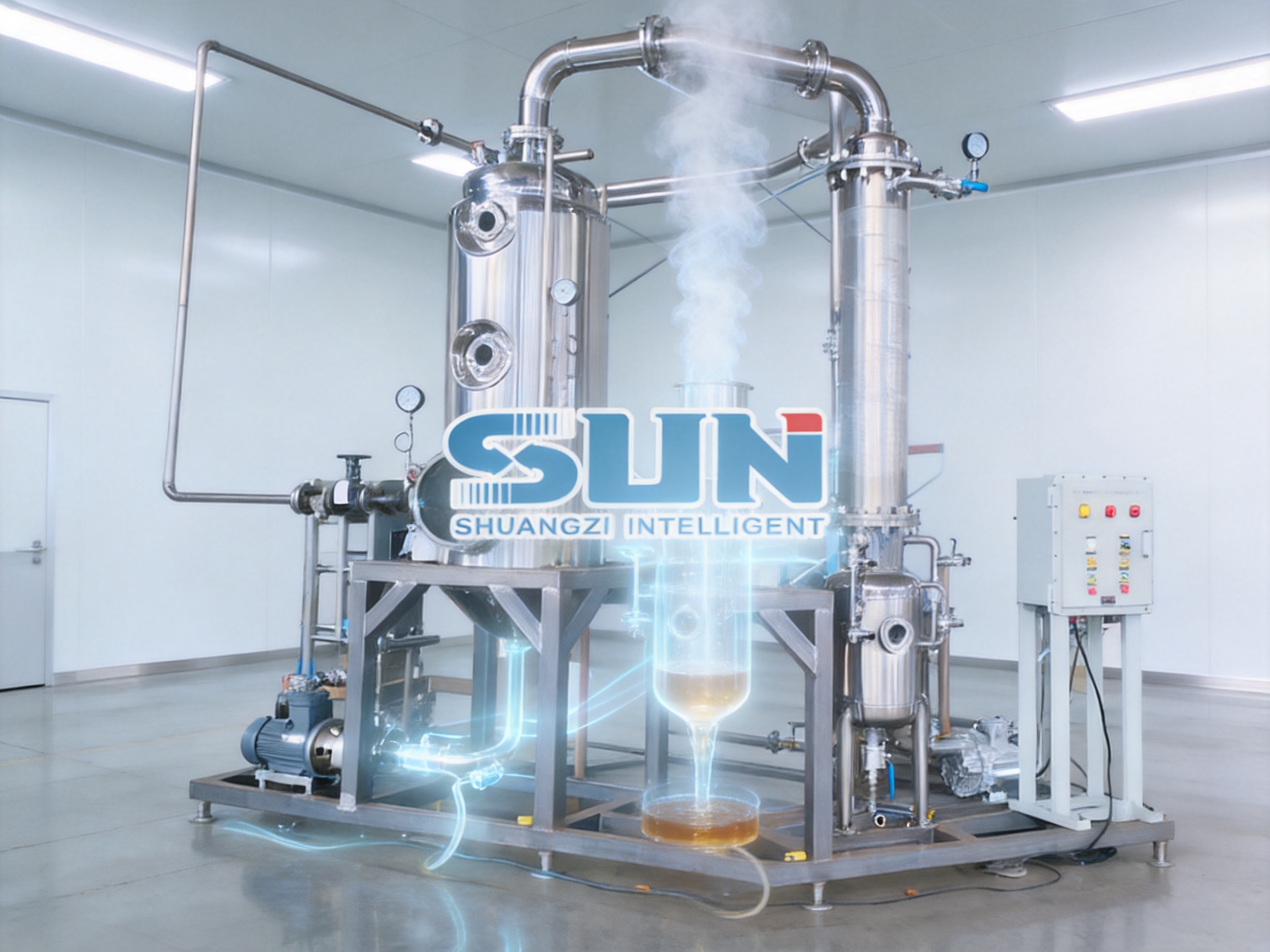
Flash evaporation systems can often be designed as compact concentration modules. They can be installed as independent units or integrated into larger production lines. In plant extraction projects, the evaporator may be installed after extraction and filtration. In biological fermentation projects, it may be connected after cell separation or purification. In Western medicine synthesis projects, it can support solvent removal and intermediate concentration. In food projects, it can concentrate juice, dairy liquid, or other liquid foods before final processing.
Turnkey project capability is particularly valuable when customers need a complete line rather than one separate machine. Engineering integration can include process flow design, equipment selection, piping layout, automation logic, utility connection, installation, commissioning, and operator training.
Applications in Key Industries
Plant Extraction Projects
Plant extraction production often involves liquid extracts with large volumes and relatively low solid content. After extraction, filtration, and sometimes precipitation, the extract must be concentrated before drying, formulation, or further purification. Heat-sensitive botanical compounds may include flavonoids, polyphenols, glycosides, alkaloids, essential aroma substances, and natural pigments. Excessive heating can reduce their activity or change product appearance.
A vacuum flash evaporator is well suited for botanical extract concentration because it can remove water or organic solvent quickly under low-pressure conditions. It can help preserve active ingredients while reducing volume, improving downstream drying efficiency, and lowering transportation or storage cost. When combined with extraction tanks, filtration systems, solvent recovery units, and vacuum low-temperature dryers, it forms a complete plant extraction process solution.
Bio-Fermentation Projects
Fermentation products can be extremely sensitive. Proteins, peptides, enzymes, microbial metabolites, probiotics-related components, and biological intermediates may be damaged by high temperature. In fermentation projects, concentration may be required after clarification, separation, membrane treatment, or purification. The flash evaporator can reduce liquid volume while controlling thermal exposure.
Biological processes also require stable, clean, and controllable equipment. Stainless steel construction, sanitary design options, automation, and reliable vacuum systems contribute to consistent operation. Zhejiang Shuangzi Intelligent Equipment Co., Ltd. has mature experience with complete fermentation system equipment and related downstream processes, allowing it to design concentration equipment that fits bio-process requirements.
Western Medicine Synthesis Projects
In pharmaceutical synthesis, concentration is frequently used to remove solvents, increase intermediate concentration, recover valuable organic solvents, or prepare materials for crystallization. Process safety, material compatibility, solvent recovery, and precise control are crucial. A vacuum flash evaporator can lower evaporation temperature, reducing the chance of thermal decomposition and supporting safer solvent removal.
For pharmaceutical engineering, equipment quality is not only mechanical. It includes documentation, material traceability, weld quality, cleanability, installation accuracy, automation, and validation support. A manufacturer with GMP-oriented pilot workshops, process research capability, and system integration experience can provide more dependable pharmaceutical solutions than suppliers focused only on standard fabrication.
Food Projects
Food concentration applications include fruit juice, vegetable juice, dairy liquids, tea extracts, natural sweeteners, sauces, and functional food ingredients. Consumers expect food products to retain fresh flavor, natural color, and nutritional value. Traditional high-temperature concentration can damage vitamins, darken color, or cause cooked flavors. Vacuum flash evaporation helps reduce these risks.
In juice concentration, rapid evaporation can help maintain aroma and natural taste. In dairy processing, controlled low-temperature concentration can reduce heat damage. In natural food projects, the equipment can be used as part of a clean, efficient, and energy-conscious production line. Stainless steel surfaces and hygienic engineering help meet the cleanliness expectations of food manufacturers.
Chemical and Environmental Applications
Chemical production often requires solvent recovery and wastewater reduction. A vacuum flash evaporator can concentrate process liquid, reduce wastewater volume, and recover solvent vapor through condensation. This can lower disposal cost and reduce environmental impact. In energy conservation and environmental protection projects, evaporation technology is often combined with pretreatment, condensation, crystallization, and drying systems to form a complete solution.
Design Features That Improve Real-World Performance
Optimized Preheater Design
The preheater is one of the most important components. It must deliver heat efficiently while keeping material flow stable. For low-viscosity materials, high heat transfer efficiency is relatively easy to achieve. For viscous extracts or high-solid liquids, the equipment must prevent fouling, localized overheating, and flow blockage. Proper heat exchange surface selection, flow velocity, heating medium control, and cleaning design contribute to stable operation.
A preheater designed only for nominal capacity may not perform well with real materials. By considering viscosity, solids, foaming behavior, solvent composition, and target concentration, engineers can design a more practical and robust system. This is where process experience becomes a clear advantage over generic competitors.
Efficient Flash Chamber
The flash chamber must allow rapid pressure drop, sufficient vapor-liquid disengagement, and stable liquid discharge. Its internal structure influences entrainment, foaming, residence time, and product loss. A chamber that is too small may cause poor separation, while an oversized chamber may increase cost and cleaning burden. Correct design balances efficiency, quality, cost, and maintainability.
For foaming materials, special attention may be required. Foam can carry liquid droplets into the vapor line, contaminating condensate and reducing yield. Proper chamber geometry, demisters, level control, and feed distribution can reduce these risks.
Reliable Condensation System
The condenser directly affects vacuum stability, recovery efficiency, and environmental performance. A condenser with insufficient area or poor cooling conditions may allow vapor to reach the vacuum pump, reducing efficiency and possibly damaging equipment. A properly engineered condenser helps maintain low pressure and recovers solvent effectively.
When organic solvents are involved, the condensation system must be designed with safety and recovery in mind. Material compatibility, sealing, vent handling, and temperature control must be evaluated. A strong engineering team can adapt the system to each solvent and process condition.
Stable Vacuum System
The vacuum pump and related components must maintain the desired pressure under variable load. During feeding, flashing, and condensation, vapor generation may fluctuate. Stable vacuum control ensures consistent evaporation temperature and repeatable product quality. Vacuum stability also improves operator confidence and reduces manual adjustment.
Depending on the process, different vacuum technologies may be selected. The final configuration should consider solvent type, condensable vapor load, operating pressure, environmental requirements, and maintenance needs.
Automation and Control
Automation is a major differentiator in modern evaporation equipment. A well-designed control system can monitor temperature, pressure, flow, liquid level, pump status, valve position, alarm conditions, and process sequence. Automated control improves repeatability and reduces dependency on manual operation. For regulated industries, process records and parameter control are particularly important.
Zhejiang Shuangzi Intelligent Equipment Co., Ltd. focuses on automation engineering design and equipment system integration. This enables the vacuum flash evaporator to be delivered not only as a mechanical unit but as a controlled process module that can communicate with other equipment in a production line.
Advanced Manufacturing Strengths
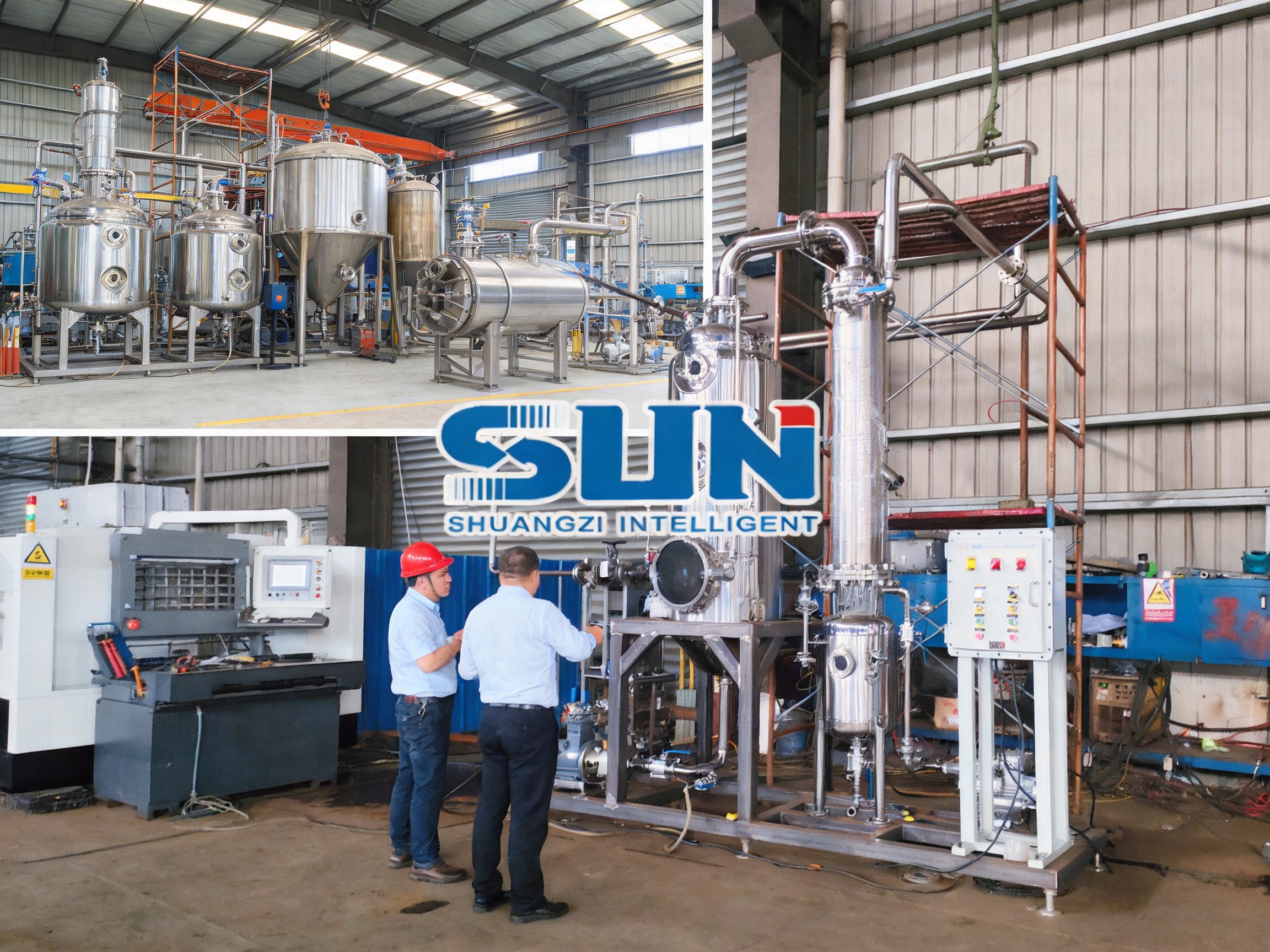
The performance of a stainless steel vacuum flash evaporator depends heavily on manufacturing quality. Stainless steel equipment must be accurately cut, formed, welded, polished, assembled, inspected, and tested. Poor welds can create hygiene risks, weak points, or leakage. Rough surfaces can trap material and make cleaning difficult. Inaccurate assembly can cause vibration, misalignment, or sealing failure. Therefore, advanced manufacturing capability is a competitive advantage.
Zhejiang Shuangzi Intelligent Equipment Co., Ltd. has developed manufacturing strengths through years of work in biological and medical equipment, plant extraction systems, fermentation systems, evaporation and concentration equipment, extraction equipment, separation and crystallization equipment, filtration equipment, containers, and turnkey projects. The company’s production resources include advanced welding and finishing equipment such as plasma argon arc welding machines, plasma cutting machines, and CAM CNC machining centers. These technologies support precise fabrication and consistent equipment quality.
Precision Cutting and Forming
Accurate cutting and forming are the foundation of high-quality stainless steel equipment. Plasma cutting provides efficient and precise shaping of stainless steel components. CNC machining supports accurate processing of flanges, connectors, structural parts, and critical interfaces. Precision in these early steps reduces later assembly errors and improves overall equipment reliability.
High-Quality Welding
Welding is critical for vacuum equipment because the system must maintain low pressure without leakage. It is also critical for hygienic equipment because weld surfaces must be smooth and cleanable. Plasma argon arc welding helps produce stable welds with good penetration and appearance. Skilled welding procedures reduce defects such as porosity, undercut, cracks, and contamination.
For industries such as food and medicine, weld finishing also matters. Smooth transitions and proper polishing reduce material residue and support effective cleaning. This helps protect product quality and reduce contamination risk.
Surface Finishing and Cleanability
Stainless steel process equipment must be easy to clean. Surface finishing influences cleaning time, microbial control, residue removal, and corrosion resistance. Polished internal surfaces can reduce product adhesion and fouling. In concentration processes, where solids content increases, cleanability becomes especially important because concentrated materials can be sticky, viscous, or prone to scaling.
A manufacturer familiar with GMP-oriented requirements and pilot production workshops can better understand the relationship between surface finish, sanitary design, cleaning procedures, and production reliability.
Assembly and System Testing
Before delivery, major components should be assembled and inspected to verify fit, sealing, instrumentation position, piping arrangement, and operational logic. Vacuum systems require leak awareness. Condensers and heating components require pressure and flow checks. Control systems require functional testing. These steps reduce installation risk and shorten commissioning time at the customer site.
Engineering and Turnkey Project Capability
Customers increasingly prefer suppliers who can provide complete solutions rather than isolated machines. A concentration machine may need to connect with upstream extraction, filtration, fermentation, or reaction equipment and downstream storage, crystallization, drying, filling, or packaging systems. Without proper integration, even a good evaporator can suffer from poor feeding, unstable discharge, cleaning difficulty, or process bottlenecks.
Zhejiang Shuangzi Intelligent Equipment Co., Ltd. takes EPC and EPCM service capability as a core strength. This means the company can support engineering, procurement, construction, project management, process design, equipment design, matching purchase, installation, line debugging, and system integration. For customers building plant extraction projects, biological fermentation projects, Western medicine synthesis projects, turnkey projects, or food projects, this integrated capability can reduce coordination complexity and improve project success.
Process Design
Effective process design begins with understanding the material and production objective. Engineers must ask questions such as: What solvent must be removed? What is the initial concentration? What is the final target concentration? Is the material heat-sensitive? Does it foam? Does it contain suspended solids? What is the viscosity? What heating and cooling utilities are available? Is solvent recovery required? What cleaning method will be used?
By answering these questions, the equipment can be selected and customized properly. This prevents common problems such as undersized condensers, unstable vacuum, excessive fouling, poor concentration control, or cleaning inconvenience.
Equipment Design
Equipment design converts process requirements into mechanical and control specifications. It includes component sizing, material selection, heat transfer calculation, vacuum system selection, condenser design, valve and pump selection, instrumentation layout, insulation, frame design, and control philosophy. For stainless steel vacuum flash evaporators, attention must be given to pressure conditions, thermal expansion, liquid level control, vapor velocity, maintenance access, and cleaning routes.
Installation and Commissioning
Even excellent equipment must be installed correctly. Installation includes positioning, leveling, piping connection, electrical wiring, instrument calibration, utility connection, vacuum checking, and safety verification. Commissioning involves water testing, empty running, material trial, parameter adjustment, operator training, and process optimization. The company’s ability to provide installation and line debugging services helps customers move from purchase to production more smoothly.
Pilot and Research Support
The company has a full set of production lines with pilot production workshop and research platform automation aligned with GMP-oriented requirements. Available processes include vacuum low-temperature drying, plant extraction, evaporation, precipitation separation, extraction, fermentation, and related steps. This helps serve users who need pilot research, scale-up validation, or process confirmation before full industrial investment.
Why Stainless Steel Construction Matters
Stainless steel is a preferred material for evaporation equipment because it combines mechanical strength, corrosion resistance, cleanability, and long service life. In food and medicine processing, stainless steel supports hygienic production and reduces contamination risk. In solvent recovery and chemical applications, suitable stainless steel grades can resist many corrosive environments when properly selected.
Compared with carbon steel or lower-grade fabrication, stainless steel provides better surface quality and longer-term reliability. It also supports polishing, sanitary connection design, and cleaning procedures. For vacuum flash evaporators, stainless steel helps maintain structural integrity under pressure difference and thermal cycling.
However, the value of stainless steel depends on manufacturing quality. Poor welding, rough polishing, contamination during fabrication, or inappropriate grade selection can reduce performance. Advanced fabrication equipment and experienced workers are essential to ensure that stainless steel advantages are fully realized.
Operational Benefits for Production Managers
Higher Throughput
Because flash evaporation is rapid, production managers can increase concentration throughput compared with slower batch concentration methods. The equipment’s capacity range from 300 L/h to 5000 L/h supports multiple production scales. For growing manufacturers, scalable models provide a pathway from pilot production to larger industrial output.
Better Batch Consistency
Stable vacuum, controlled preheating, and automated operation improve batch-to-batch consistency. This is important for customers who must meet internal quality standards, customer specifications, or regulatory expectations. Consistency also reduces waste, rework, and operator intervention.
Lower Operating Risk
Low-temperature operation reduces the risk of overheating and product degradation. Condensation and solvent recovery reduce vapor discharge. Stainless steel construction supports safe and durable operation. Proper automation provides alarms and interlocks that help operators respond to abnormal conditions.
Reduced Downstream Load
Concentration reduces liquid volume before downstream operations. This can improve the efficiency of drying, crystallization, storage, transportation, or waste treatment. For example, concentrating a botanical extract before vacuum low-temperature drying can reduce drying time and energy use. Concentrating wastewater can reduce disposal volume. Recovering solvent can lower material cost.
Comparison With Common Competing Solutions
Compared With Open Atmospheric Evaporation
Open atmospheric evaporation is simple but often inefficient and damaging to sensitive materials. It operates at higher temperatures, loses vapor to the environment, and may create odor or safety issues. Vacuum flash evaporation offers lower boiling temperature, vapor condensation, better solvent recovery, and improved product protection.
Compared With Traditional Batch Vacuum Concentrators
Batch vacuum concentrators can work at reduced pressure but may have longer residence time and slower evaporation. A flash evaporator provides rapid vaporization after preheating, reducing thermal exposure and improving efficiency. It can also be more easily integrated into continuous or semi-continuous processes.
Compared With Generic Low-Cost Evaporators
Generic evaporators may appear economical at purchase but can create long-term problems such as high energy use, poor cleaning, unstable vacuum, weak condensation, leakage, and limited customization. A properly engineered stainless steel vacuum flash evaporator offers better lifecycle value through reliable performance, process adaptation, energy savings, product quality protection, and system integration.
Compared With Suppliers Without Turnkey Capability
Some suppliers provide only equipment manufacturing. Customers must then coordinate process design, piping, automation, installation, and commissioning separately. This can increase project risk. A supplier with EPC and EPCM capability can align equipment with the complete process, reducing communication gaps and improving final plant performance.
Maintenance and Cleaning Considerations
Maintenance of a vacuum flash evaporator focuses on keeping heat transfer surfaces clean, ensuring vacuum tightness, protecting pumps, inspecting valves and instruments, and maintaining condenser performance. Regular cleaning prevents fouling that could reduce heat transfer or cause contamination. The cleaning schedule depends on material properties, operating hours, concentration level, and hygienic requirements.
Operators should monitor signs such as reduced evaporation rate, unstable vacuum, abnormal pump noise, higher heating demand, poor condensate flow, or changes in product quality. These symptoms may indicate fouling, leakage, blocked lines, condenser scaling, or instrument problems. Preventive maintenance helps avoid unplanned downtime.
Clean-in-place design can be considered for food, medicine, and biological applications. Proper spray coverage, drainability, smooth internal surfaces, and sanitary valves support effective cleaning. For sticky extracts or high-solid products, cleaning design should be discussed during engineering rather than treated as an afterthought.
Customization Options and Project Adaptation
No single evaporator design is ideal for every material. Customization may include capacity selection, preheater type, condenser size, vacuum pump configuration, anti-foam features, sanitary design level, automation system, explosion protection considerations, solvent recovery arrangement, heating medium selection, skid-mounted layout, insulation, and cleaning system integration.
For food applications, hygienic construction and cleanability may be prioritized. For pharmaceutical applications, documentation, material traceability, and GMP-oriented details may be emphasized. For organic solvent recovery, sealing, condensation efficiency, safety, and recovery rate may be central. For wastewater reduction, corrosion resistance, energy efficiency, and durability may be most important.
The company’s broad experience in extraction, fermentation, concentration, separation, crystallization, filtration, containers, and drying equipment makes it possible to design around the customer’s full production process. This helps avoid the mistake of optimizing one machine while ignoring the total line.
Quality, Reliability, and Long-Term Value
The purchase of a vacuum flash evaporator should be evaluated by long-term value, not only initial cost. Important factors include evaporation efficiency, energy consumption, maintenance frequency, product quality, cleaning time, solvent recovery rate, downtime risk, automation level, and service support. Equipment that costs less upfront may become expensive if it causes product loss, quality instability, high utility use, or frequent repairs.
A high-quality stainless steel vacuum flash evaporator provides value through stable operation, low-temperature concentration, efficient solvent removal, durable construction, cleanable design, and flexible integration. When supported by experienced engineering and advanced manufacturing, it can become a reliable core unit in food, pharmaceutical, biological, plant extraction, and chemical production lines.
Zhejiang Shuangzi Intelligent Equipment Co., Ltd. strengthens this value with its professional focus on biology and medical equipment, process technology, automation engineering, manufacturing, installation, and turnkey integration. Its facility covers a floor area of 16706 square meters and a structure area of 17800 square meters, providing a substantial manufacturing and engineering base. Its mature product lines and pilot research capability support customers from laboratory development to industrial operation.
Q&A Section
Q1: What is the main purpose of a stainless steel vacuum flash evaporator?
A stainless steel vacuum flash evaporator is used to reduce the solvent content of liquid materials and increase solid concentration. It is suitable for water removal, organic solvent recovery, extract concentration, wastewater reduction, and preparation for downstream drying, crystallization, or formulation.
Q2: Why is vacuum flash evaporation suitable for heat-sensitive materials?
Under vacuum, the boiling point of the solvent is reduced. The material can therefore be concentrated at lower temperatures. In addition, flash evaporation occurs rapidly, shortening heat exposure. This helps protect nutrients, aroma compounds, natural pigments, biological substances, and pharmaceutical active ingredients.
Q3: What is the evaporation capacity range of this equipment?
The available evaporation volume range is 300 L/h to 5000 L/h, corresponding to models from SZN-300-HSK to SZN-5000-HSK. The appropriate model depends on feed rate, solvent content, target concentration, material properties, and operating schedule.
Q4: What are the main components of the system?
The core components include a preheater, flash chamber, condenser, vacuum pump, process piping, valves, instruments, and control system. Additional components may be customized according to project requirements.
Q5: Can the evaporator recover organic solvents?
Yes. Vapor generated in the flash chamber is directed to a condenser, where it is converted back into liquid. This supports solvent recovery, reduces emissions, lowers solvent purchasing cost, and improves environmental performance. For organic solvent processes, condenser design and safety considerations should be engineered carefully.
Q6: How does this equipment compare with traditional open evaporation?
Compared with open atmospheric evaporation, vacuum flash evaporation operates at lower temperature, provides faster solvent removal, improves product quality protection, supports vapor condensation, reduces environmental discharge, and can lower energy consumption when properly integrated.
Q7: Is the equipment suitable for food production?
Yes. It is suitable for juice, dairy products, tea extracts, vegetable extracts, natural food ingredients, and other liquid foods. Stainless steel construction, low-temperature concentration, and hygienic design make it appropriate for many food processing applications.
Q8: Is the equipment suitable for pharmaceutical and biological processes?
Yes. It can be used for Chinese herbal extract concentration, biological agent concentration, fermentation liquid processing, pharmaceutical intermediates, and solvent removal in synthesis projects. Customization may be required to meet specific process and cleanliness standards.
Q9: Why is manufacturing quality important for vacuum equipment?
Vacuum equipment must maintain stable low pressure without leakage. High-quality welding, accurate assembly, smooth surface finishing, and reliable sealing are essential. Poor manufacturing can lead to unstable vacuum, contamination risk, cleaning difficulty, and reduced service life.
Q10: Can the evaporator be included in a turnkey project?
Yes. It can be integrated into complete plant extraction, bio-fermentation, Western medicine synthesis, food, and environmental protection projects. Turnkey capability can include process design, equipment manufacturing, matching procurement, installation, commissioning, and system integration.
Conclusion
The stainless steel vacuum flash evaporator is a high-efficiency concentration solution for industries that require solvent removal with product protection. By using the flash principle under vacuum, it rapidly vaporizes solvent at lower temperatures, helping preserve heat-sensitive components while improving concentration efficiency. With an evaporation capacity range of 300 L/h to 5000 L/h, it can serve pilot, medium-scale, and industrial production needs.
Its advantages include low-temperature operation, short residence time, energy-saving potential, solvent recovery capability, stainless steel hygiene, flexible integration, and strong suitability for food, medicine, biological fermentation, plant extraction, chemical recovery, and wastewater reduction. Compared with conventional evaporators and generic low-cost systems, it offers better quality protection, more stable operation, and stronger long-term value when properly engineered.
The manufacturing and engineering strength behind the equipment is equally important. Zhejiang Shuangzi Intelligent Equipment Co., Ltd. combines process technology, automation engineering design, stainless steel equipment manufacturing, advanced welding and machining capability, pilot research support, installation service, line debugging, and turnkey project integration. This allows customers to receive not only a concentration machine but a practical process solution designed for real production conditions.
For manufacturers seeking efficient evaporation, high product quality, reduced solvent loss, and reliable industrial integration, the stainless steel vacuum flash evaporator represents a strong and future-oriented choice.
References
1. Coulson, J. M., Richardson, J. F., Backhurst, J. R., and Harker, J. H. Chemical Engineering, Volume 2: Particle Technology and Separation Processes.
2. McCabe, W. L., Smith, J. C., and Harriott, P. Unit Operations of Chemical Engineering.
3. Fellows, P. J. Food Processing Technology: Principles and Practice.
4. Mujumdar, A. S. Handbook of Industrial Drying.
5. Perry, R. H., and Green, D. W. Perry’s Chemical Engineers’ Handbook.
6. Singh, R. P., and Heldman, D. R. Introduction to Food Engineering.
7. Kister, H. Z. Distillation Design.
8. Tatterson, G. B. Scaleup and Design of Industrial Mixing Processes.